Published 24 October 2026 · Version 1.0
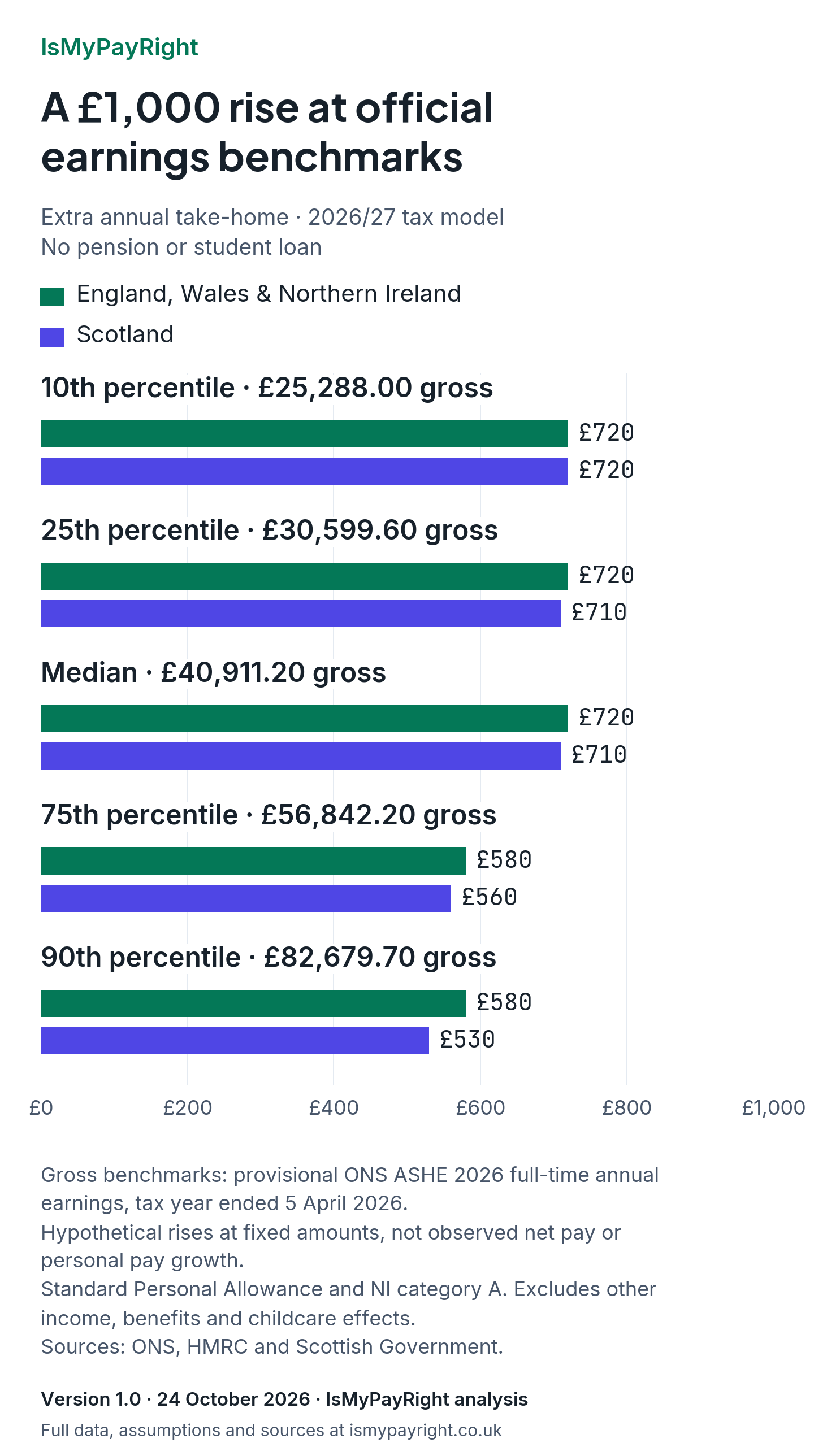
Thirty modelled comparisons at five provisional ONS annual gross earnings benchmarks, with UK tax-region and loan assumptions kept explicit.
2026/27 tax model; provisional ONS 2026 annual earnings for full-time employee jobs. No pension contributions. These are hypothetical pay changes, not observed take-home earnings.
Read the findings and full method →Download the evidence
Published 26 September 2026 · Version 1.0
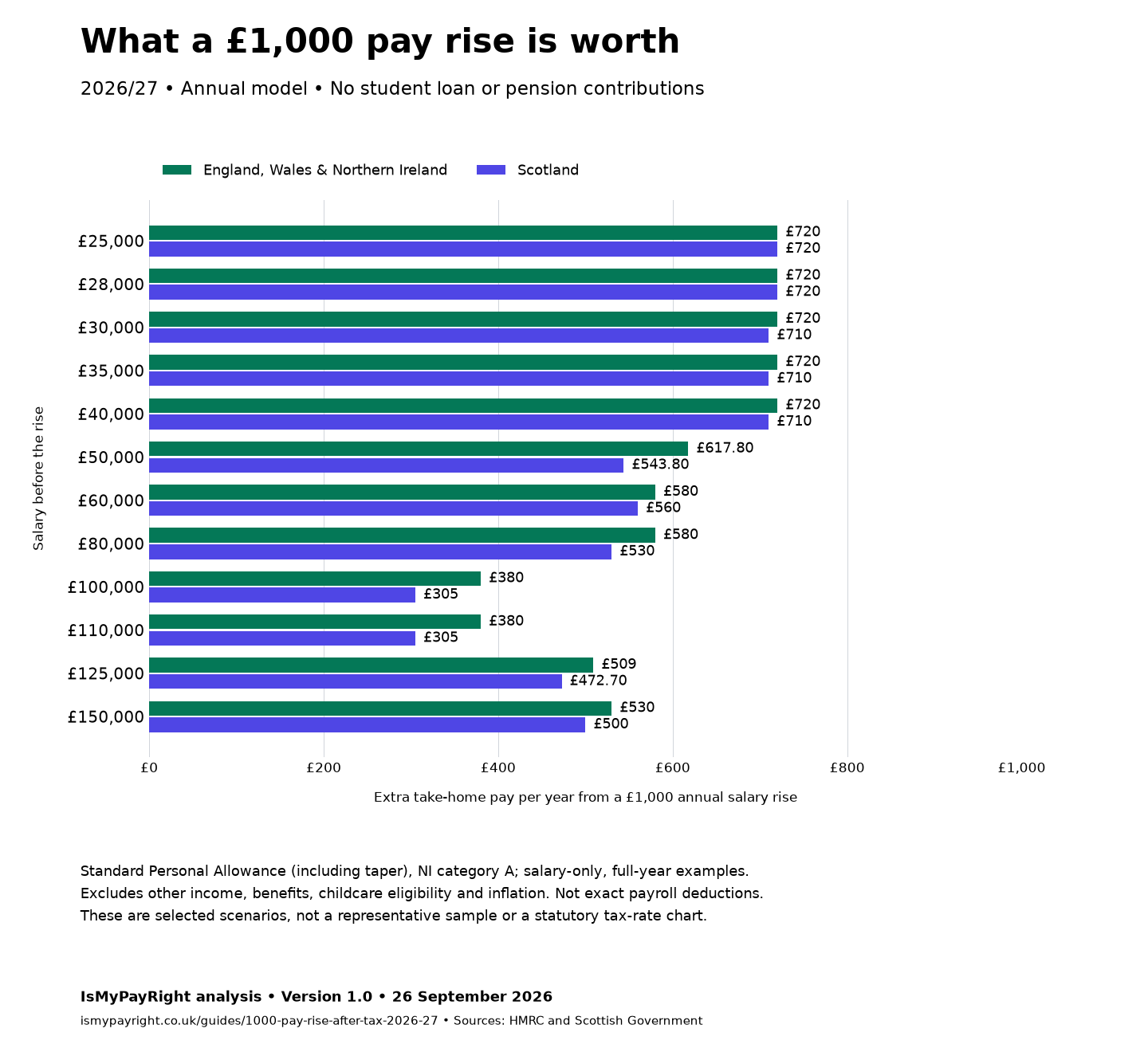
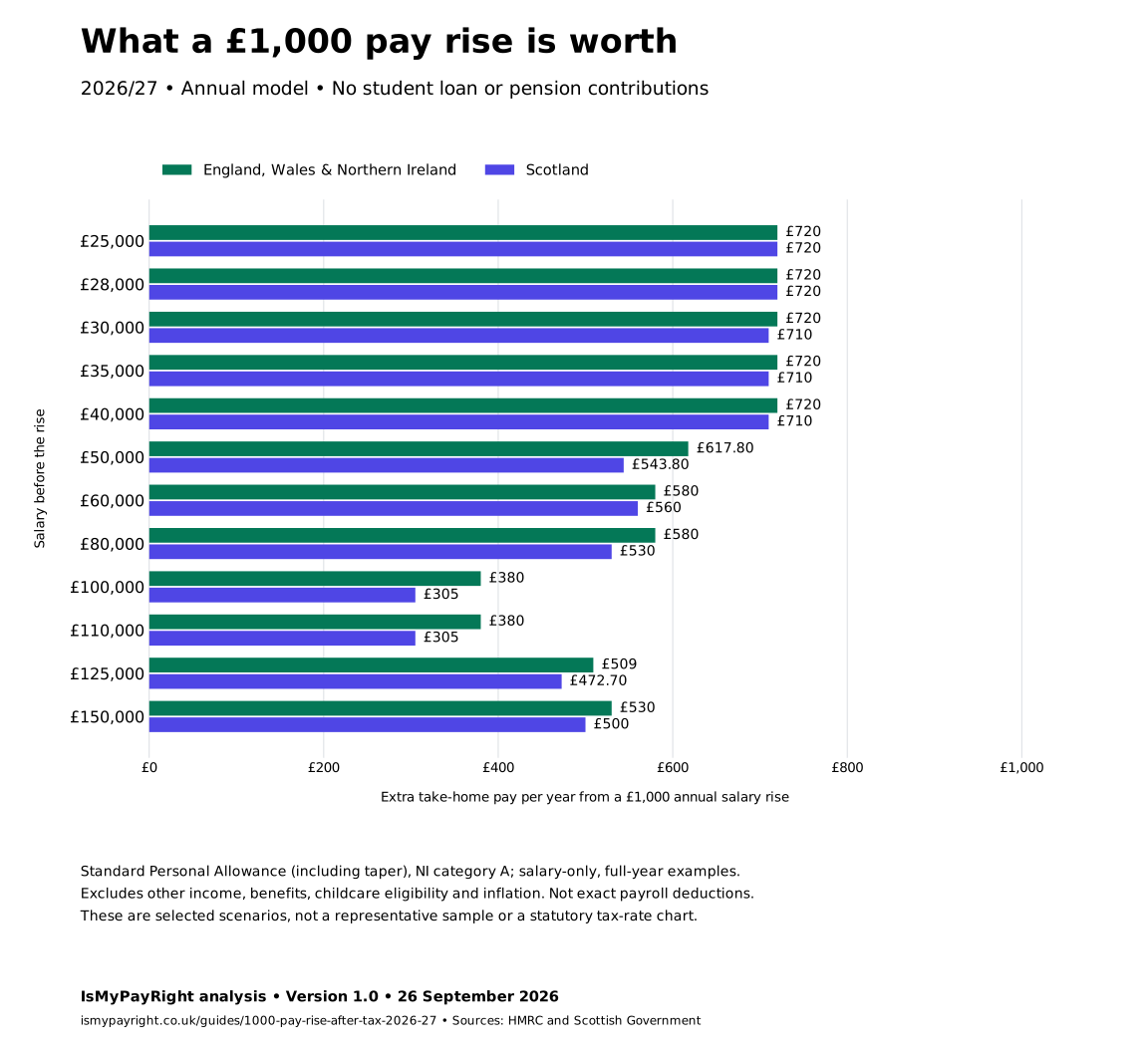
Two hundred and forty annual comparisons across 12 starting salaries, two UK tax regimes and 10 student-loan arrangements.
2026/27 annual model with standard Personal Allowance and employee NI category A. No pension, salary sacrifice or household-support changes. Chosen scenarios are not a population sample.
Read the findings and full method →Download the evidence
Use a finding in your own work
Our original analysis, tables and charts may be reused with credit to IsMyPayRight and a link to the relevant report. Keep the version, tax year, source-data status and assumptions alongside the figure. Official source material retains its own licence terms.
These are modelled annual comparisons. Pension choices, household support and a payslip’s year-to-date history can change an individual result. Each report sets out its full scope.
We publish dated versions so a finding remains checkable. For a correction or a question, use our editorial and corrections process. Read our calculation methodology for the wider approach.